
24 November 2026
Urban Sketching in Watercolour: Paint Fast Before the Light (or the Rain) Changes
By L'atelier d'Isabelle Santori · Lire cet article en français
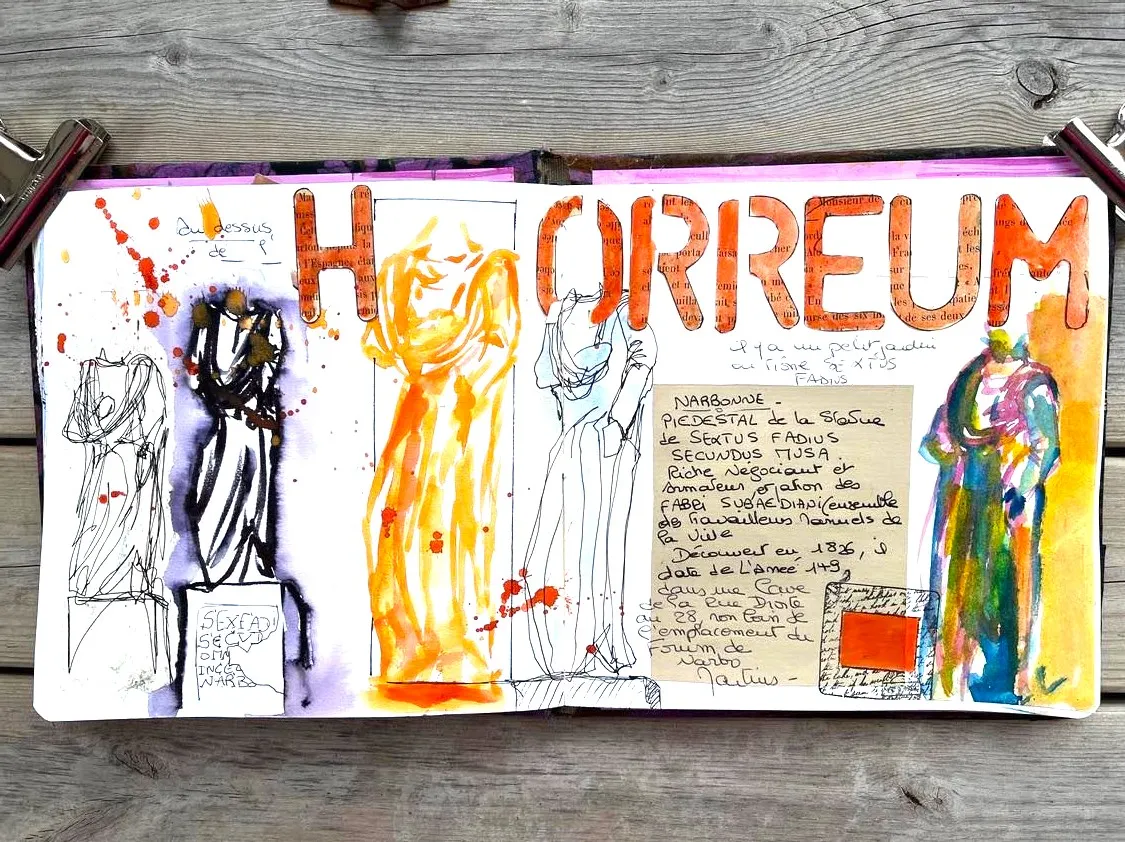
The sun moves, shadows slide, a shower arrives: painting outdoors means painting against the clock, and many beginners give up before finishing their page. A timed 4-step method that first fixes what is about to disappear (shadows, reflections, backlighting) makes it possible to finish a watercolour in 20 to 30 minutes. You will also find a limited palette, solutions for rain, cold, dry wind and falling night, an anti-weather kit checklist and a "one subject, three lights" exercise to learn to see what moves first.
Painting Against the Clock in the Rain of O‘ahu
On 14 November 2026, the members of Urban Sketchers O‘ahu sketched at the Liliuokalani Botanical Garden in Nu‘uanu, in the rain. Big drops fell from the trees and soaked the sketchbooks. They carried on, staying on the paths, away from the muddy grass.
This session sums up on-the-spot watercolour well: you paint against the clock. The sun moves, shadows slide, a shower arrives. The light won't wait for you, and you need a method to capture it before it changes.
Here is a method in timed steps for completing a page in 20 to 30 minutes. You will then find practical answers to the three situations that tend to discourage people: changing light, rain, and cold or the end of the day.
Why the Light Slips Through Your Fingers
The sun is constantly moving across the sky. In a short time, a cast shadow lengthens, shifts or disappears behind a cloud. On Solving Watercolour, Andy Griffiths points out that the light can change within minutes.
The consequence is simple: first, you fix what is about to disappear. A shadow on a wall, a reflection or backlighting will vanish before the façade, which won't move.
Before the First Brushstroke
Timer: 2 minutes
- Draw a small arrow in a corner of the page: it shows where the light comes from.
- Make a thumbnail the size of a postage stamp, in three values: light, medium, dark.
- Choose what matters: a cast shadow, backlighting or a sky. Just one.
These two minutes save you time later. When the light has moved, the arrow and the thumbnail will remind you of the original scene. The Paint and Draw Outdoors sheet from Canson also advises observing the composition, the direction of the light and the shadows before starting.
Choose a simple subject. A door, a tree or a street corner is enough for a first session. To train your eye to work quickly, the "30 seconds, 2 minutes, 5 minutes" method for sketching in train stations is a good warm-up.
The 4-Step Method for On-the-Spot Watercolour
Step 1: Shadows and Fleeting Areas
Timer: 5 minutes
Put down the cast shadows and the areas that are going to change straight away. Take the shadow mix you prepared in advance on the palette. Don't aim for precision: look for shape and direction.
Step 2: The Sky, Without Going Back to It
Timer: 5 minutes
Wet the sky area, then drop the colour into the water: this is wet-on-wet. Let the paper do the work. If you rework a sky that is drying, you get blooms and muddy colour.
Step 3: The Medium Masses
Timer: 10 minutes
Cover the large shapes: walls, foliage, ground. Canson recommends starting with the sketch and the large masses, then saving the details for later. Two or three brushes are enough, as Solving Watercolour advises.
Step 4: Details and Ink Line
Timer: 5 to 10 minutes
Details and ink line come last. They can be finished even if the light has changed, because the shadows are already in place. A window, a silhouette or a note is enough to bring the page to life.
You can discover Isabelle Santori's work in her on-the-spot watercolours. You can see this combination of wash and line in her on-the-spot watercolours.
A Limited Palette for Speed
Three or four colours are enough: a blue, a yellow, an earth tone, and possibly a red. Fewer pans means less hesitation. Solving Watercolour also recommends a limited palette suited to the subject.
Prepare your shadow mixes before you leave, in a corner of the palette. A blue mixed with an earth tone makes a coloured grey that suits most shadows. At Step 1, all you will have to do is pick it up with your brush.
A dominant colour can also give unity to a whole series of pages. A dominant colour can also give unity to a whole series of pages.
When It Rains
First option: take shelter. A porch, a café's covered terrace or a large tree offer a protected viewpoint. Canson advises spotting a refuge before the storm and settling in the shade or under cover.
Second option: accept a few drops. In O‘ahu, soaked paper didn't stop the session. A drop in a fresh wash leaves a little pale bloom: keep it as a texture.
On really damp days, switch to backup tools. Water-soluble pencils and a water-resistant ink pen hold up well on damp paper. You can add the water later, when it's dry.
Anti-Weather Kit Checklist
- A spiral-bound sketchbook or a block glued on four sides, which buckles less
- Clips if you work on loose sheets
- A watercolour box with 3 or 4 colours
- Two or three brushes
- A water-resistant ink pen
- A few water-soluble pencils
- Paper towel
- A plastic bag for the sketchbook and a waterproof bag for wet tools
- A parasol or a small umbrella, against rain as well as sun
- Fingerless gloves
- A small bottle of water
When It's Cold or the Day Is Fading
In cold, damp weather, paper dries slowly. Work in separate areas that don't touch, to stop colours from running into one another. Return to an area when it is dry to the touch.
Numb fingers lose their precision. Solving Watercolour advises fingerless gloves: mittens keep your hand warm and leave the brush free.
When night falls, know when to stop. Write the colours down, right on the page: "pale orange sky", "blue-violet shadow". These notes, which Solving Watercolour also recommends, keep the essentials better than a simple photo.
If you want to carry on regardless, these night sketching techniques for painting city lights take over. Shop windows and street lamps then become your subject.
The Opposite Case: Dry Wind
In dry wind, paper can dry very quickly. Work in small, well-wetted areas and finish each one before moving on to the next. Look for a spot sheltered from the wind, behind a low wall for example.
Exercise: One Subject, Three Lights
Timer: 3 times 15 minutes
Choose a subject close to home: a façade, a tree, a bench. Paint it in the morning, at midday and in the late afternoon, for 15 minutes each time. Keep the same palette and the same framing.
Then lay the three pages side by side. Look at where the shadows went and how the sky changed colour. This exercise teaches you to see what moves first.
Imperfection Is Part of the Sketchbook
A page painted outdoors is never perfect. A drip, a raindrop, a shadow left at the starting time all tell the story of the moment lived. That is what gives a sketchbook painted on location its life.
Isabelle's books, Palette Marocaine, INDEscriptible and L'Infusion Bleue, can be found on the books page. She also teaches travel sketchbook and quick sketching classes, in her studio in Sigean or outdoors. The rest of her work can be discovered at isabelle-santori.fr.
The next time the sky wavers, take out your sketchbook anyway. Arrow, thumbnail, shadows first: your on-the-spot watercolour will be ready before the light changes.
Key points
| Section | Key messages |
|---|---|
| Introduction | Urban Sketchers O‘ahu sketched in the rain on 14 November 2026: painting on the spot means painting against the clock. |
| Changing light | Shadows move within half an hour: first fix what is about to disappear. |
| Preparation (2 min) | Light arrow, 3-value thumbnail, a single focal point. |
| 4-step method | Shadows (5 min), wet-on-wet sky (5 min), medium masses (10 min), details and ink (5 to 10 min). |
| Limited palette | A blue, a yellow, an earth tone, possibly a red; shadow mixes prepared in advance. |
| Rain | Take shelter or accept the drops; water-soluble pencils and a water-resistant pen as backup. |
| Cold, night, wind | Separate areas, mittens, written colour notes; in the tramontane wind, small, well-wetted areas. |
| Exercise | One subject, three lights: 3 times 15 minutes, then compare the pages. |
| Anti-weather kit | Glued sketchbook or block, 2-3 brushes, pen, paper towel, waterproof bags, umbrella, mittens. |